Last updated November 22, 2026
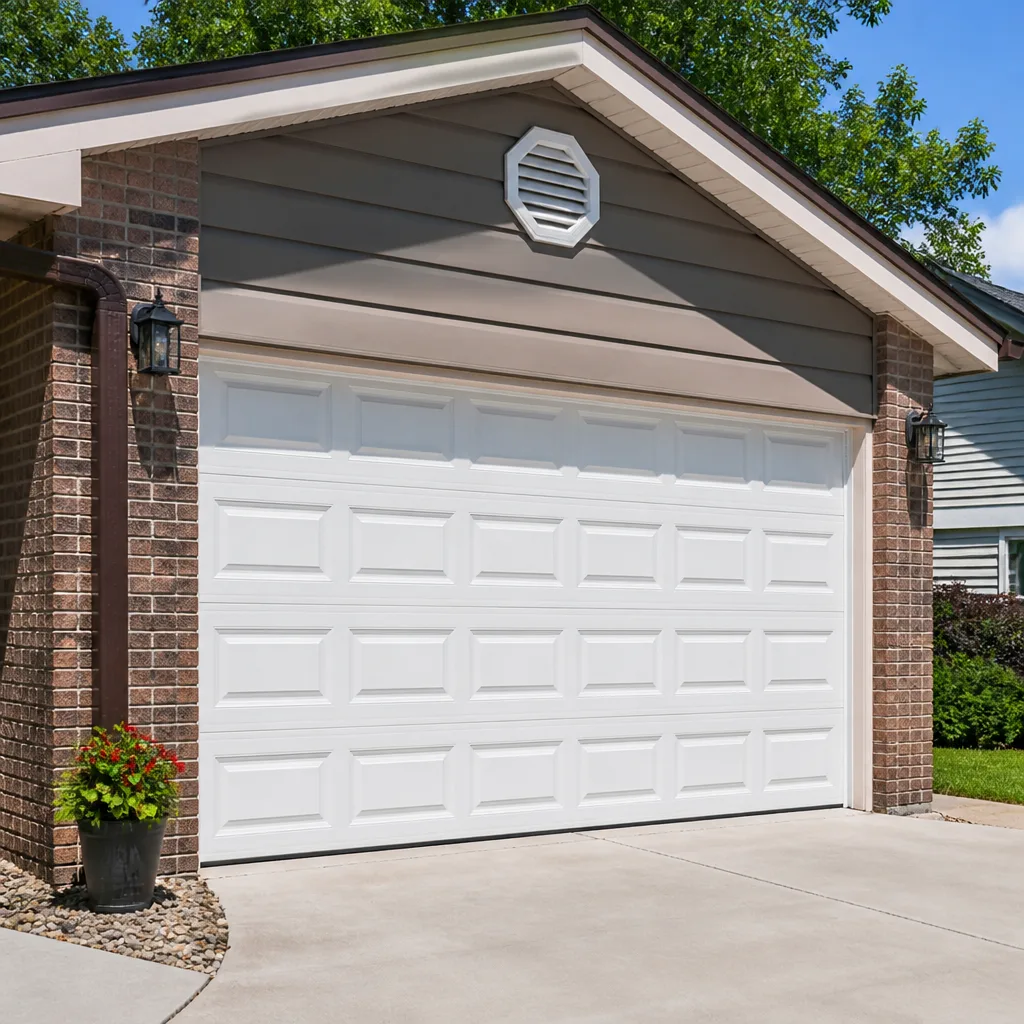 Raised-panel steel
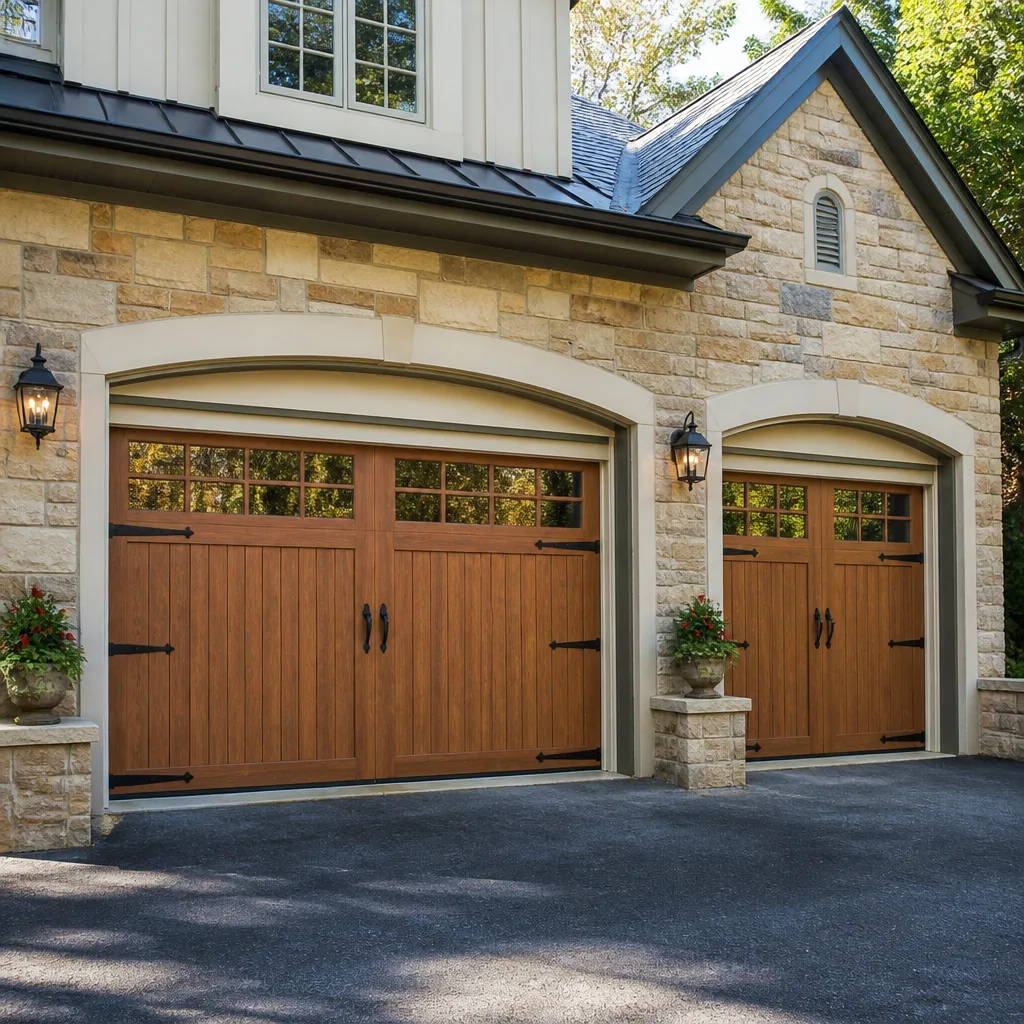 Carriage house
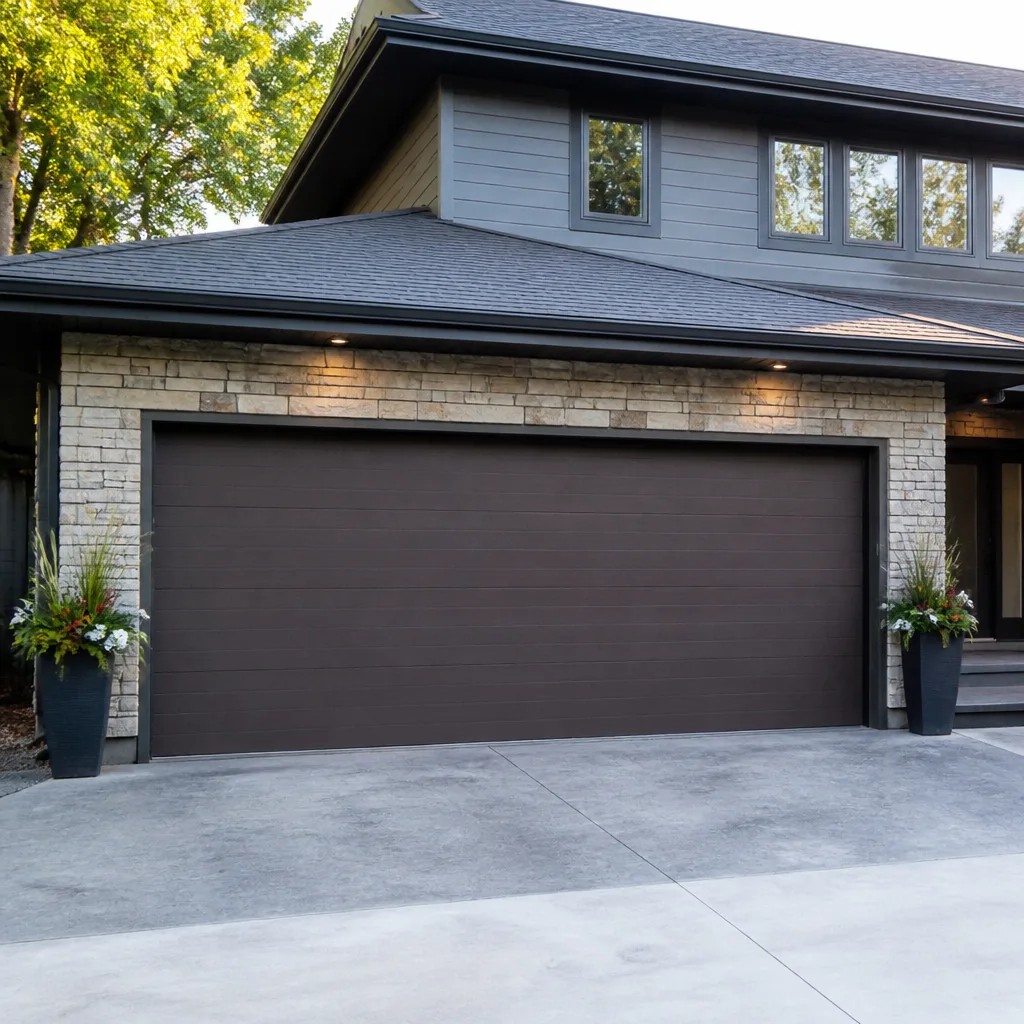 Modern flush
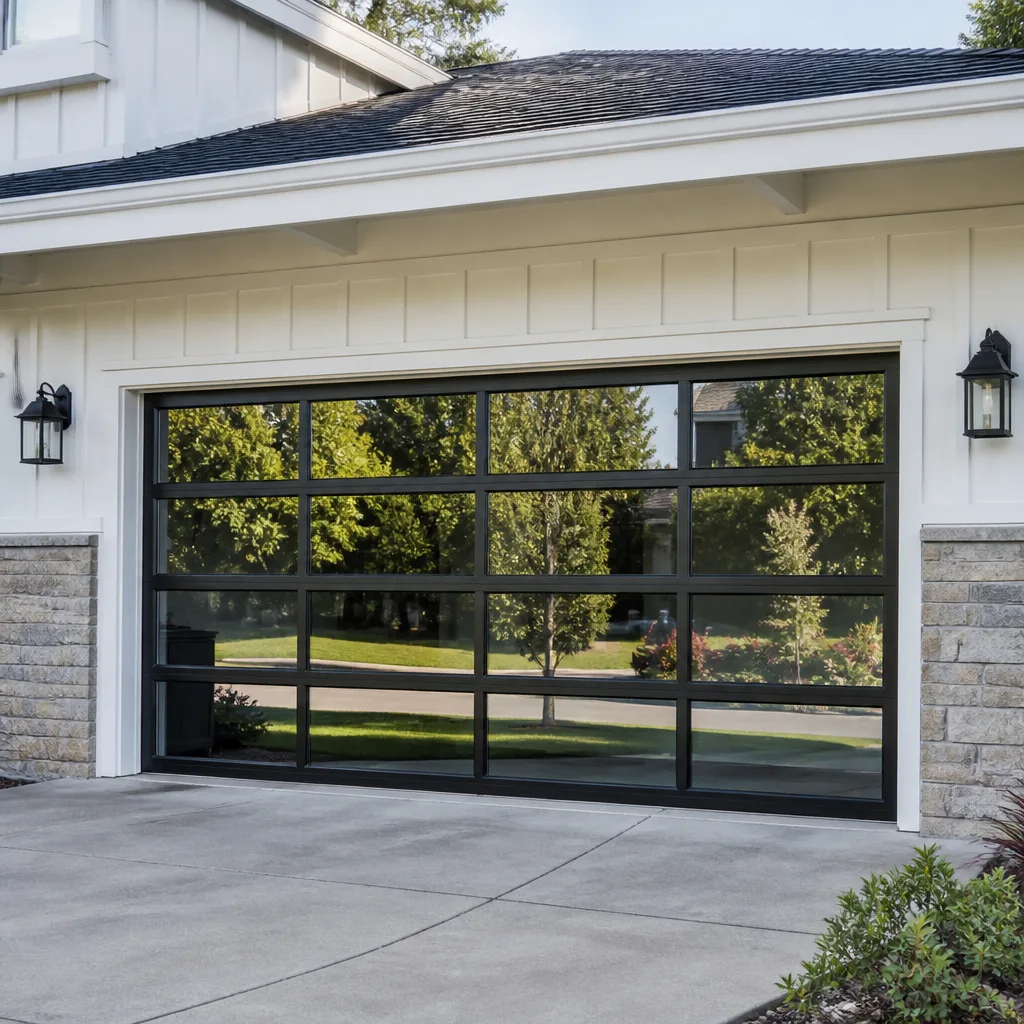 Full-view glass
 LiftMaster openers
 Chamberlain openers
Full 25-point door and opener safety check with every visit - springs, cables, rollers, tracks, and your LiftMaster or Chamberlain opener included
You get a price before we start. It does not change when the pro arrives.
Get your free estimateGarage Door Repair Maintenance Checklist for Cuyahoga Falls Homeowners
The number one reason garage doors fail early in Northeast Ohio isn’t neglect. It’s lubrication with the wrong product. Standard WD-40 is the first thing most homeowners grab, and it’s the worst thing you can put on steel rollers in a freeze-thaw climate. It’s a solvent, not a lubricant, and it washes out when the temperature drops, leaving the metal dry and grinding. The real culprit isn’t a door that nobody touched. It’s a door that got touched with the wrong thing at the wrong time of year. This checklist is sequenced by how often components actually fail in Cuyahoga Falls, not by the order they appear in your owner’s manual.
Quick Answer
A proper garage door maintenance checklist for Cuyahoga Falls should cover the door’s moving parts in order of failure frequency: springs and cables first, then rollers, hinges, tracks, and the opener. Lubricate metal parts with a silicone-based or white lithium spray, never standard WD-40, especially before the first hard freeze. Inspect dialed-in safety features like the photo-eye and auto-reverse monthly, and let a trained technician handle springs, cables, and opener internals.
Styles & brands we work with
- Raised-panel steel
- Carriage house
- Modern flush
- Full-view glass
- LiftMaster openers
- Chamberlain openers
Table of Contents
- Why Northeast Ohio’s Climate Wears Doors Differently
- The Inspection Sequence: What Fails First in Cuyahoga Falls
- The Right Lubricant for Each Component (They’re Not the Same)
- Brand-Specific Maintenance Notes for Openers Common in the Area
- Visual Red-Flag Index: What Worn Parts Look Like Before They Break
- A Seasonal Schedule for Cuyahoga Falls Homeowners
- What You Can Do Safely vs. What Requires a Technician
- Common Mistakes to Avoid
Why Northeast Ohio’s Climate Wears Doors Differently
Cuyahoga Falls sits in the Cuyahoga Valley where the river carves through and the surrounding hills trap cold air in winter. That creates a specific pattern of wear that a maintenance checklist written for a mild climate won’t account for. Doors here go through dozens of freeze-thaw cycles every winter. Each thaw pushes moisture into seams and pivot points. Each night’s freeze turns it to ice and pries things slightly apart. Then the door cycles the next morning.
Think about what that does to a roller over the course of a season. The steel shaft expands and contracts with every temperature swing. Grease that was fine in October turns tacky in January. Metal that ran smooth in the fall starts to sound like a gravel driveway by February. Multiply that by a decade on the same door and the failure points line up in a predictable order.
The Cuyahoga Falls housing factor
A lot of the homes in Cuyahoga Falls and the surrounding Summit County neighborhoods have attached or detached garages built decades ago. Those older doors were often fitted with heavier steel panels, and many have been retrofitted with newer openers over the years. That mix of old door and new opener creates its own maintenance rhythm. The door is doing more work than the opener was designed for, so things wear faster.
We’ve noticed the pattern across Cuyahoga Falls, from the hilly streets near the river to the flatter residential blocks further out: the doors that survive the longest are the ones where the moving parts get checked before the first freeze, not after something breaks. Cuyahoga Falls Garage Door Repair Pros works on every major brand, so we get a close look at what’s failing and why. The climate is the common thread.
The winter wear isn’t just a comfort issue either. A door that binds and works harder draws more power through the opener. It strains the springs. It chews the rollers. Every part downstream of the problem starts failing a little sooner. That’s why the sequence matters more than the checklist itself.
The Inspection Sequence: What Fails First in Cuyahoga Falls
Most manufacturer checklists go top to bottom or follow the door’s assembly diagram. That’s engineering-order, not failure-order. In a freeze-thaw climate, failures cluster at specific components. Here’s the order we recommend, based on what we see most often in Cuyahoga Falls.
- Springs and cables. Highest failure rate by a wide margin. Cables fray at the drum over winter. Torsion springs crack under the constant load-and-release cycle. Inspect for rust, fraying, or visible gaps first.
- Rollers. Steel rollers take the most punishment from temperature swings. Check for flat spots, cracks in the nylon wheels, and frozen bearings. Bad rollers cause noise, vibration, and uneven travel.
- Hinges. The pivot points collect grit and lose lubrication fast in cold weather. Check for looseness, worn holes, or bent leaves.
- Tracks. Impact damage or a door that’s been bumped will deform the track. Look for dents, dings, or gaps between the track and the door edge.
- Weather seals. Bottom and side seals crack and pull away after a few seasons. A gap at the bottom lets in snow and pests and puts stress on the door’s balance.
- Opener. Check the force adjustment, the safety reverse, and any seasonal noise. Opener problems often trace back to a door that’s out of balance, not the opener itself.
- Hardware and fasteners. Bolts work loose over a year of cycles. Look for missing or backed-out screws on the hinges and brackets.
That sequence matters because starting at the bottom of the door and working up will miss the earliest signs. Springs and cables are also the two components you should never touch on your own. If your inspection turns up anything suspicious on either of those, stop and call a technician. We handle garage door spring repair as a dedicated service because it’s the most dangerous and most commonly botched DIY job in this trade.
The sequence also helps you prioritize spending. If you only have time for one pass through the checklist before winter, do the spring and cable check first. Then rollers. The rest can wait a few weeks.
What the balance check reveals
Before you get into components, do one quick balance test. Disconnect the opener (usually a pull cord or a clutch on the rail), lift the door halfway, and let go. A balanced door stays put. A door that drifts down on its own has springs that are losing tension. A door that feels heavy with the opener disconnected has weak springs or a cable problem. That one test tells you whether the rest of the inspection needs to be rushed or can wait for a free weekend.
The Right Lubricant for Each Component (They’re Not the Same)
This is where most homeowners go wrong, and it’s the reason the checklist exists. Not every moving part wants the same lubricant, and the wrong one does more harm than good. We’ve listed these by component type because the biggest mistake is treating the whole door with one can of spray.
Rollers
Use a silicone-based spray or a light white lithium grease. Nylon rollers take silicone well and don’t collect grit. Steel rollers want white lithium on the bearing surface, not the outside of the wheel. Never use standard WD-40: it’s a water-displacing solvent and it evaporates off hot or cold steel. That’s why the door sounds worse after you spray it and cycle it a few times. Clean off old waxy buildup with a rag and a mild degreaser before re-lubricating.
Hinges
White lithium grease is the right choice. The pivot points are metal-on-metal and don’t like silicone, which doesn’t stay in place under load. A thin layer is enough. Too much collects grit and turns into a paste that traps dirt in the hinge barrel.
Springs
This is the biggest confusion point. Torsion springs don’t need to be sprayed with anything, and they shouldn’t be. Manufacturers typically ship springs with their own finish. Adding lubricant can attract grit that accelerates wear. If a tech has told you to protect the spring, follow that instruction. Never touch a torsion spring yourself. There’s a specific reason these are dangerous: a torsion spring under load holds enough energy to cause serious injury if it releases unexpectedly. garage door repair technicians know how to de-tension a spring, replace it, and re-tension it safely. It’s not a homeowner job.
Tracks
Don’t lubricate the tracks. They’re designed to stay dry so the rollers can roll freely. Grease in the tracks collects dust and grit and turns into a sticky mess that slows the door down. Wipe the tracks clean with a dry rag. A damp rag with mild soap is fine if there’s heavy buildup. Then leave them alone. This is one of the most commonly mis-lubricated parts on a garage door.
Opener chain or belt
If your opener has a chain, it usually comes from the factory with a light grease. Too much added grease traps grit. A dry chain wants a purpose-made chain spray, not silicone. Belt-driven openers generally don’t need lubrication at all. The manual that came with your unit is the right reference here, and it’s also the point where brand matters.
Weather seals
Silicone spray on the rubber seals at the bottom and sides is fine and actually helps. It keeps the rubber supple and slows cracking. A light pass once a year is plenty.
Brand-Specific Maintenance Notes for Openers Common in the Area
The openers in Cuyahoga Falls homes cluster around a handful of brands, and each has its own quirks worth knowing before you start poking around. We work on LiftMaster, Chamberlain, Genie, Clopay, Amarr, Wayne Dalton, Craftsman, and Raynor equipment. Here’s how the maintenance checklist maps to the brands we see most.
Chamberlain and LiftMaster
Both share a lot of internal design because they’re related. Many units use the yellow learn button for programming new remotes. The safety reverse test is straightforward: put a 2×4 flat on the ground, close the door, and the door should reverse off it. If it doesn’t, the force adjustment is too high. Check the photo-eye LEDs every month. One dim or off LED is usually dirt or a misaligned bracket.
Genie
Genie openers often use a chain drive and are sensitive to chain tension. A loose chain slaps the rail and sounds louder than it should. It’s a simple check, but adjusting it wrong can strip the sprocket. If you’re not confident, leave the adjustment to a tech. Genie’s newer smart units also benefit from a firmware check occasionally if you use the app.
Craftsman
A lot of Craftsman openers installed in the 1990s and 2000s are still in service around Cuyahoga Falls. They’re workhorses, but the older models weren’t designed for the heavier garage doors that some homeowners have since installed. If the opener cycles slow, or reverses at random, the door may be out of balance and the opener is compensating. That’s an opener repair or door adjustment issue, not a sign the opener is done.
Clopay, Amarr, Wayne Dalton, and Raynor doors
These brands set the door itself, not the opener. The maintenance rhythm on the door side doesn’t change much by brand, but the weather seals on some models have specific channel shapes, and replacements have to match. Amarr and Clopay doors commonly use specific bottom seal profiles, and a generic universal seal can leave gaps. Wayne Dalton and Raynor doors behave the same way. Match the seal to the door, not the other way around.
For opener-specific troubleshooting, our garage door opener repair page breaks down the common failure modes by brand. If the door runs but the opener misbehaves, that’s the place to start.
Visual Red-Flag Index: What Worn Parts Look Like Before They Break
This is the section most checklists skip. Homeowners can’t fix what they don’t recognize, so here’s a photo-in-words index of what failing parts look like.
Frayed or worn cables
A healthy cable is a tight, even coil of wire. A failing one has single strands sticking out like wire bristles, or shows a kink where the drum has spun unevenly. The cable along the side of the door should be uniformly taut. If you see a loop of slack, or the cable looks like it’s resting against the door panel instead of pulling evenly, stop cycling the door and call a technician. A snapped cable can whip and cause injury.
Cracked or flat-spotted rollers
Roll in a bad roller: the wheel should be perfectly round with no visible gaps in the nylon or steel. A cracked nylon roller shows a spiderweb line across the face. A steel roller with a frozen bearing has a telltale wobble when you spin it. Flat spots make the door bounce and sound like it’s clunking through every track. Any roller that doesn’t spin freely by hand is ready to replace.
Deformed tracks
A healthy track is a straight, even channel. Look along the edge from the angle of the light. Any dent that catches the light as a shadow is a problem. A door that’s bumped a track often leaves a widened section, not a nick, where the roller has forced its way through. Sighting down the track from a low angle makes it easy to spot.
Deformed hinges
A healthy hinge has flat leaves that seat flush against the panel. A failing hinge is bent, or the pin is working its way out. Run your eye along the hinge line and look for one that doesn’t sit flush. The hinge isn’t a structural part you need to panic over: it’s a straightforward replacement.
Opener symptoms
An opener that runs but the door doesn’t move means a stripped gear, a broken drive shaft, or a disengaged trolley. An opener that reverses at random means the photo-eye is misaligned, dirty, or getting a false signal from sun glare. An opener that hums but does nothing usually means the capacitor or a stripped sprocket. Each of these is a different repair.
Prevention is a habit, not a document. If you’ve only got a few minutes, snap a photo of your door’s springs, cables, and track from the ground, then check the photo against these descriptions every three months. It’s a fast way to catch a red flag before it becomes a repair bill.
A Seasonal Schedule for Cuyahoga Falls Homeowners
A checklist that only gets run once is a checklist that catches one failure. Here’s how to spread it across the year in a way that lines up with the local climate. Mark these four times on the calendar and run the right subset each time.
- Early fall (before the first freeze). Do the full sequence. Springs, cables, rollers, hinges, tracks, seals, and opener. Lubricate the correct parts with the correct products. Check the door’s balance. This is the most important pass of the year because it catches small problems before the cold makes them worse.
- Mid-winter. Quick visual check only. Photo-eye test, listen for new sounds, look at cables and springs from the ground. Don’t spray anything on a cold spring or a cold chain. Steel is more brittle and parts grip harder in extreme cold.
- Early spring. Full inspection again. Winter is the harshest season here, so this pass catches the damage before it compounds into summer. Look especially at seals, since winter is when bottom seals take the most abuse.
- Midsummer. Light pass. Focus on weather seals (they dry out in summer) and the opener force settings, which are worth re-checking after a season of temperature swings.
That structure is more useful than the generic “check your door twice a year” advice in most manuals. The Cuyahoga Falls climate clusters the wear into specific windows, and a schedule that matches those windows catches more problems in less time.
What to skip when it’s below freezing
Don’t sweep the track with a wet rag in sub-zero temperatures. Don’t spray any lubricant on a frozen chain or spring. Don’t try to inspect torsion springs closely when the temperature is low: you don’t want to be touching cold stiff metal anyway. Save the detailed inspection for a warmer day. A quick look from inside with the door closed is the safe winter approach.
What You Can Do Safely vs. What Requires a Technician
This is where an honest maintenance guide earns its keep. There are real things homeowners can safely maintain. There are also parts of a garage door that can hurt you badly if you get them wrong. Here’s the split, with the reason behind each.
Safe for homeowners
- Lubricating rollers, hinges, and weather seals with the correct product.
- Wiping tracks clean with a dry or lightly damp rag.
- Testing the photo-eye and safety reverse monthly.
- Tightening visible bolts and checking hinge screws.
- Visual inspection of springs, cables, and tracks from the ground.
- Cleaning off old grease or WD-40 buildup before re-lubricating correctly.
Requires a technician
- Spring replacement. Torsion springs hold enough stored energy to cause serious injury if released. There’s no safe DIY path to a torsion spring job.
- Cable replacement or adjustment. Cables run under heavy tension and can whip. They also need to be set correctly to keep the door operating safely.
- Opener internal repairs. Gears, capacitors, and drive assemblies involve the motor circuit and mechanical components that aren’t accessible to a homeowner.
- Track straightening or replacement. A bent track needs to be reshaped to the door’s geometry, not just tapped back with a hammer.
- Balance adjustment. Correcting a door that drifts requires adjusting the spring tension, which is a technician-only job.
The reason for each “no” isn’t a liability statement. It’s that these are the parts with stored energy, tension, and mechanical force that can hurt you before you realize what’s happening. The frustration with most DIY guides is they tell you to call a pro without explaining why. This is the why.
Common Mistakes to Avoid
- Spraying the whole door with WD-40. It’s the most common mistake we see in Cuyahoga Falls. It’s a solvent, not a lubricant, and it makes cold-weather wear worse instead of better. It also washes out whatever factory grease the door came with.
- Greasing the tracks. Tracks are meant to run dry. Grease in the tracks turns into a grit magnet and slows the door down. Wipe them clean, don’t lube them.
- Treating a slow door as an opener problem. If the door moves slowly or reverses at random, the door is usually out of balance or a roller is bad, not the opener. Replacing the opener before checking the door is money spent on a symptom.
- Ignoring small track dents. A bump to a track often looks minor but forces the roller to work at an angle. Over a winter that angle chews the roller and puts uneven tension on the spring.
- Running the door with a frayed cable. A single broken cable strand is a warning sign, not a cosmetic flaw. A snapped cable can whip and cause serious injury. Stop cycling the door and call a technician.
- Adjusting spring tension without the right tools. We can’t say this strongly enough. Torsion springs require specific winding bars and specific technique. A slip can send the winding bar flying or the spring loose. This is a trained-professional job.
- Skipping the pre-winter check. A lot of Cuyahoga Falls failures trace back to a check that didn’t happen in September. The freeze-thaw stress is heaviest on parts that haven’t been lubricated or tightened before the first cold snap.
See the difference
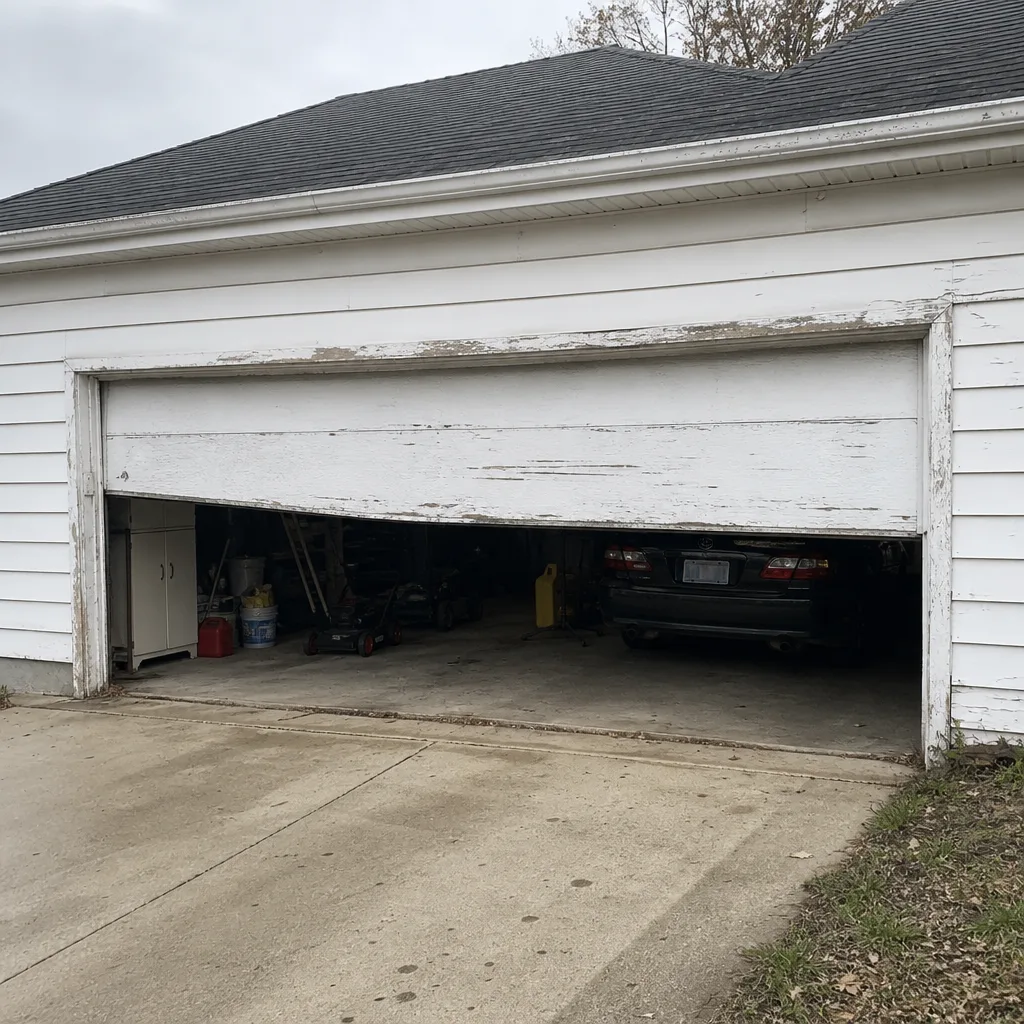 Before
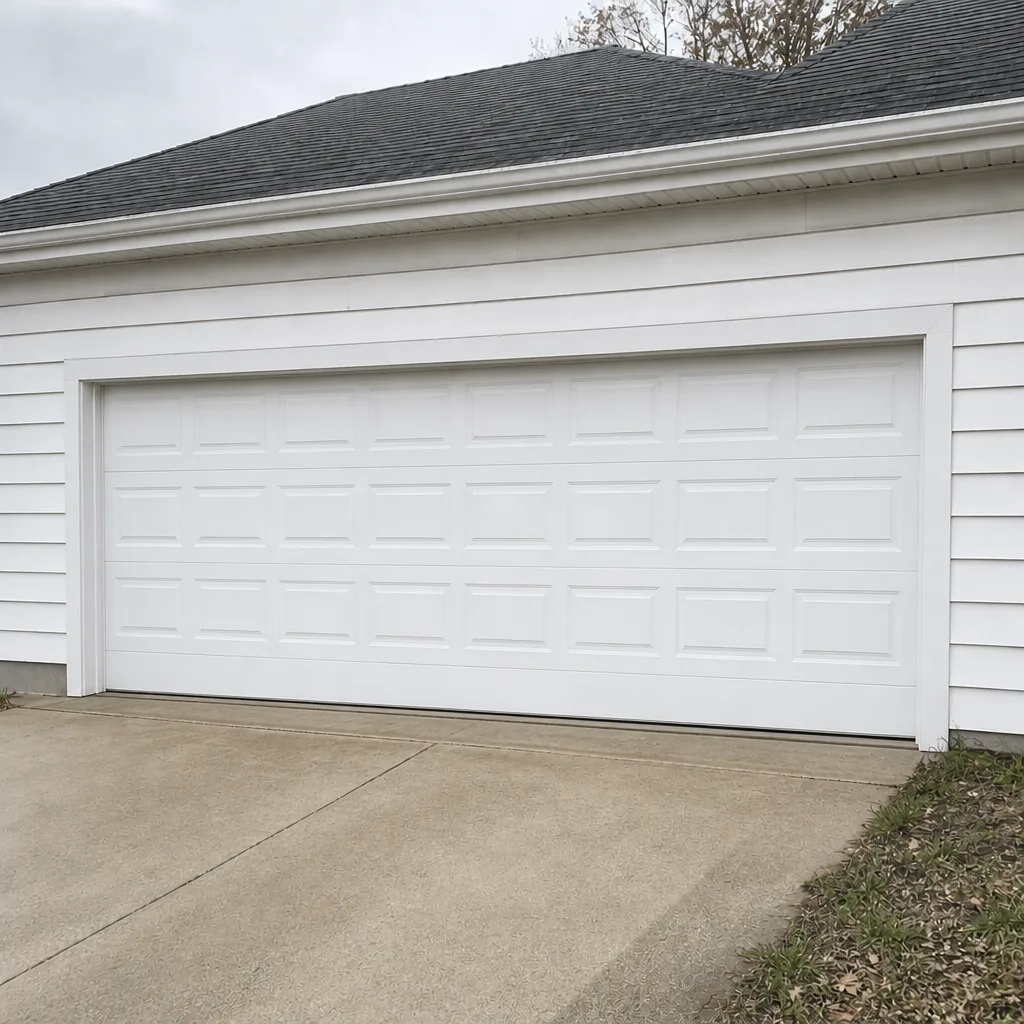 After
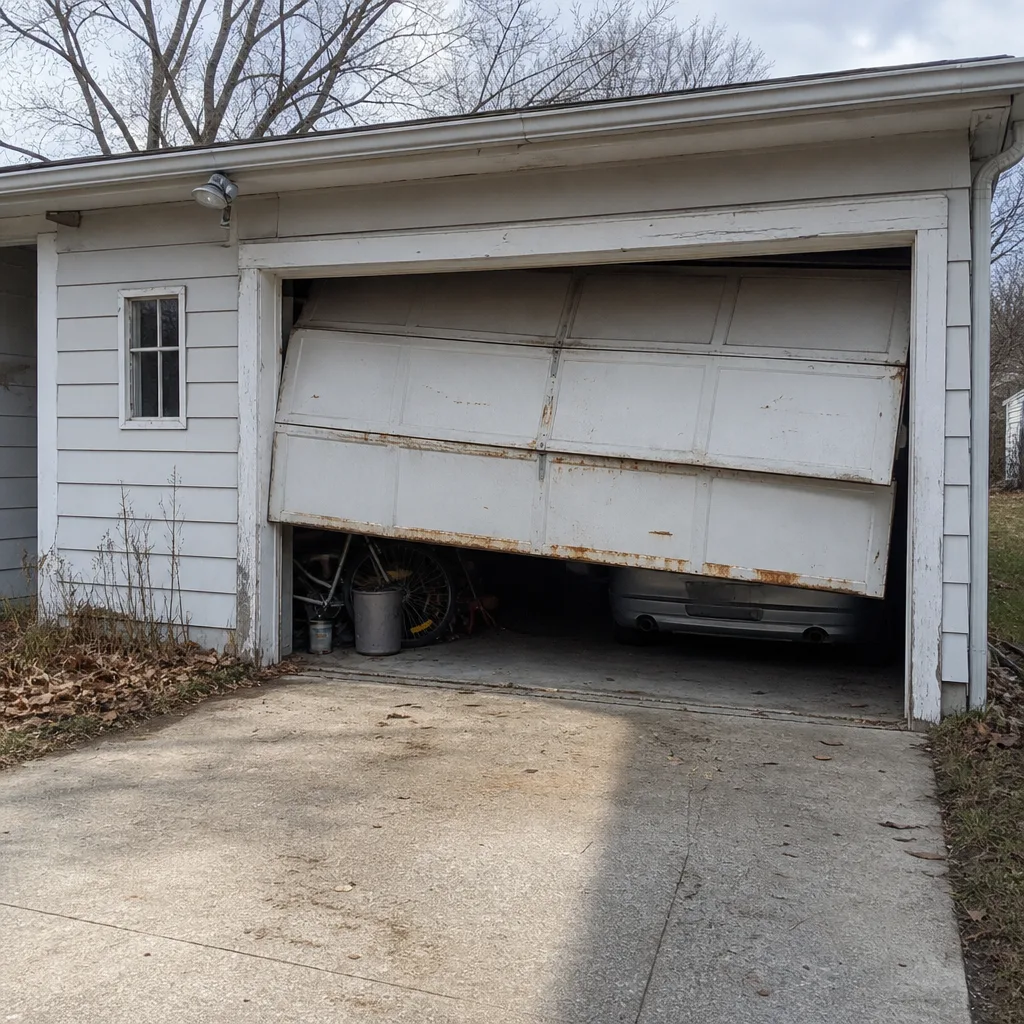 Before
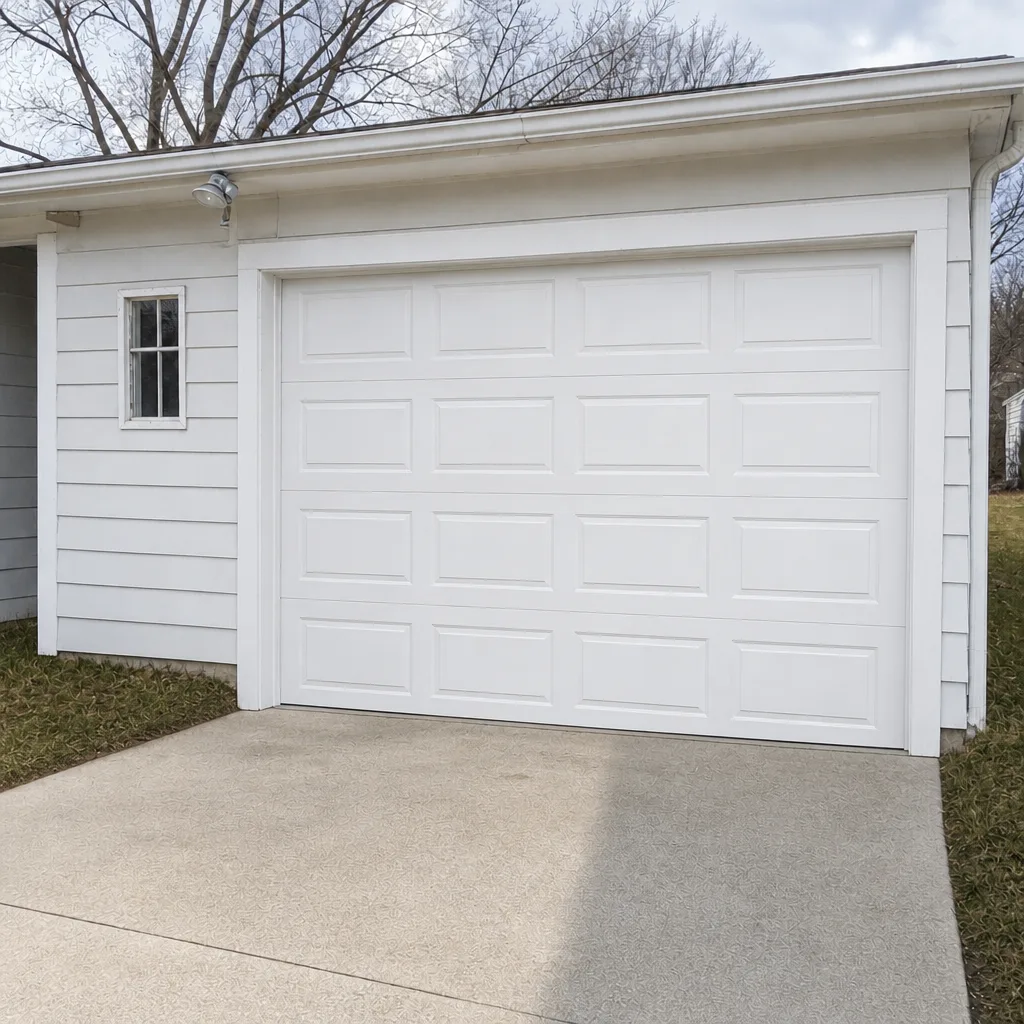 After
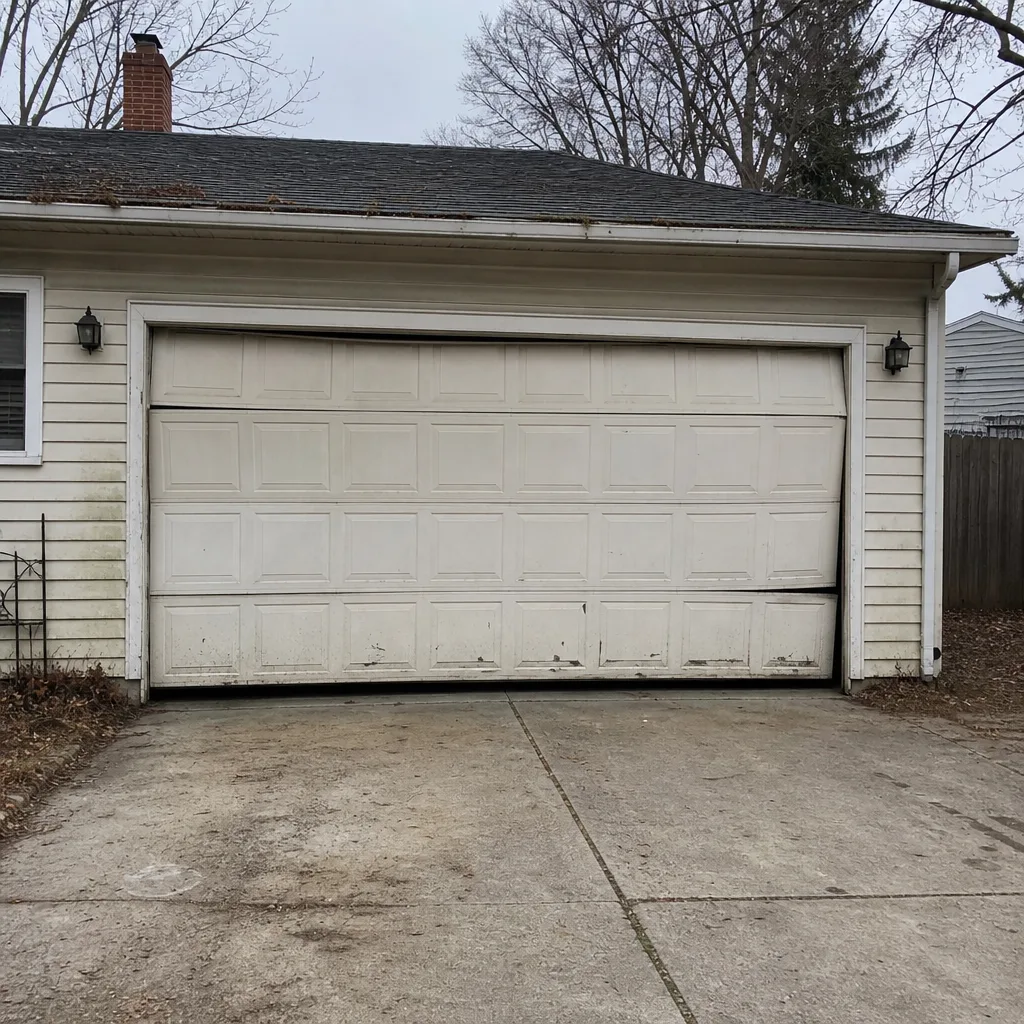 Before
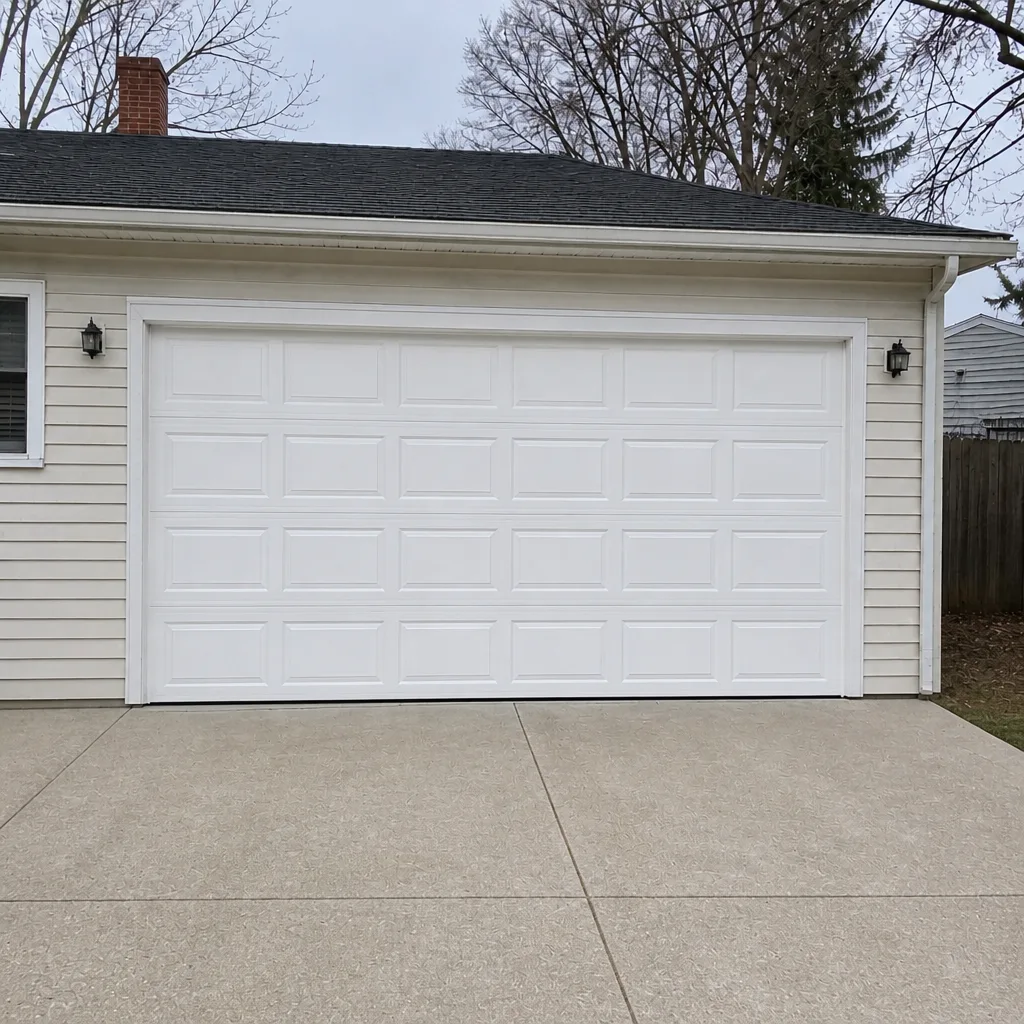 After
When to Call a Professional
Call a professional if you find a frayed or snapped cable, a broken or visibly relaxed spring, a door that won’t stay balanced when you lift it partway with the opener disconnected, or a track that’s been bent out of shape. Call if the door reverses on its own without any obstruction, or if the opener runs but the door doesn’t move. Call if you hear a sharp snap from the spring area and the door won’t lift. All of these are signs of a part under tension that needs trained hands.
Cuyahoga Falls Garage Door Repair Pros offers free estimates in Cuyahoga Falls. We’re set up for emergency garage door service when the door won’t move and you’re stuck, and we carry the parts to handle most repairs in a single visit. Our technicians have up to 8 years of experience and work on the major brands you’re likely to have. Call (866) 857-0883 for a free estimate, and we’ll get an appointment that works for you.
Frequently Asked Questions
Twice a year is the right rhythm here, and the most important pass is in early fall before the first freeze. The freeze-thaw cycles in Northeast Ohio dry out lubricant faster than a stable climate would. Use silicone spray on rollers and seals, white lithium on hinges, and leave the tracks dry. Call (866) 857-0883 if you’re not sure what to use on a specific part.
A silicone-based spray or white lithium grease, depending on the part. Silicone for rollers and weather seals, white lithium for hinges and metal pivot points. Never standard WD-40. It’s a solvent that evaporates under cold weather and actually accelerates wear on steel rollers. If you’re doing the job right, you’ll need two products, not one.
No. Torsion and extension springs are under heavy tension and can release suddenly with enough energy to cause serious injury. Spring repair requires specific tools and training, and it’s not a job we’d teach a homeowner to do in a guide. We handle spring repair as a dedicated service, and the free estimate sets the price before any work starts. Call (866) 857-0883 for a quote.
Usually the photo-eye sensors are misaligned, dirty, or getting false glare from low sun. Check that both LEDs are solid, clean the lenses, and confirm the sensors face each other across the door opening. If the door still reverses, the force settings or the safety reverse may need adjustment. Our garage door opener repair page covers the brand-specific steps. Call (866) 857-0883 for a same-day visit.
Typical garage door repair in Cuyahoga Falls runs from about $150 – $400 depending on the part. Roller and hinge replacement tends to land at the low end. Spring replacement and cable work sit higher because of the labor and safety gear involved. The written estimate sets the price before work starts, so there are no surprises. Call (866) 857-0883 for a free estimate.
Start with the springs and cables. Look for rust, visible gaps in the spring coil, and fraying or slack in the cables. Check rollers for flat spots or cracks. Look along the tracks from a low angle to spot dents. Test the safety reverse with a piece of wood, and verify the photo-eye LEDs are solid. Then lubricate correctly. If anything looks off on the springs or cables, call (866) 857-0883 and leave it to a technician.
The Bottom Line
A useful maintenance checklist isn’t the same ten items the manufacturer printed. It’s sequenced by what actually fails first in your climate, and it uses the right products on the right parts. In Cuyahoga Falls, the freeze-thaw cycles put springs, cables, and rollers at the top of the risk list. Lubrication choices matter more than frequency. And there’s a clear line between what homeowners can safely do and what needs a trained technician, especially on springs and cables. Run the full sequence before the first freeze, do the quick checks between seasons, and call when anything under tension looks wrong. Call (866) 857-0883 for a free estimate.
Written by the team at Cuyahoga Falls Garage Door Repair Pros.